Thursday, March 31, 2022

How does tradition-induced brain damage get healed?

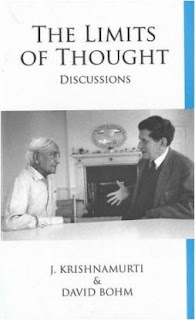
Last month I explored the question “Can tradition cause brain damage?” in a blog.  The post was based on a dialogue between spiritual teacher Jiddu Krishnamurti and physicist David Bohm in the book “The limits of thought”. My blog ended with a brief mention of how the brain damage could get healed as per the dialogue. In this article, I would like to expand on the healing process as JK-Bohm discuss it in the book.

Can the damage be healed at all? JK says, “If it is completely damaged, you can’t do anything about it, you are ready for an asylum. But we are talking of a brain that is not too damaged.”1

What is the first necessity? JK says, “That is the first necessity, that I realize it.” What do I realize? “That whatever the damaged brain does, which is the result of thought and tradition and all the rest of it, will produce further damage.”2

Let me try to explain this part with an example. Let’s say the cultural tradition says that you must become a successful person otherwise your life is a waste or success is necessary for a secure future. So, the thought of becoming successful dominates my life. It involves identifying success parameters like wealth, position, fame, social contribution, etc. And I get caught in the measurement game. I constantly compare what I have (wealth, name, fame) with some gold standard of success, find something that is still missing and strive to get there.

We can extend this to religious tradition as well. JK says, “I have accumulated psychologically as a Hindu; another has accumulated as a Muslim; there are thousands of divisions. Therefore, accumulation in its very nature divides people, and therefore creates conflict.”3

What JK is saying is that the first step is to realize that my thought process is caught in a loop that is the result of the tradition-induced brain damage and it is making the damage worse.  The next thing that may happen is a deep insight which “acts as a tremendous shock or jolt”4 to the brain.

Deep insight into the movement of thought: JK says, “If I have an insight into the whole nature of control, which is measure, that liberates the mind from the burden.”5 “When there is this insight, the damage is undon.”6 However, JK warns, “It (the insight) cannot be invited. It’s like saying – I’ll be attentive in order to receive truth. That’s nonsense.”7

Now, insights are not new to us. When there is a shift of perception while looking at an optical illusion, it is an example of a tiny insight. Many of us also experience a small jolt when we realize a belief, we held for a long time is false. For example, Santa Clause is a fiction, or ghosts don’t exist. Could a deep insight JK is talking about bring a significant change in the brain? Yes, it is possible. Unfortunately, there is no formula or method for getting the insight.

Don’t be concerned with truth: Should I strive for such a deep insight into truth? JK says, “Don’t be concerned with truth, you don’t know what it means. Be concerned only with (thought-created) reality and its distortions. To be free of distortions, just observe the distortions, don’t resist them, just observe them. That observation needs (attentional) freedom and that freedom and the observation will give you energy to push away the distortions.”8 A distortion typically manifests as a disturbance such as fear, anxiety, stress, anger, blame, guilt, etc.

To summarize, we need attentional freedom to watch the movement of thought. It is important to observe the movement especially when there is a disturbance in the form of fear, anxiety, anger, etc. This observation may cultivate the ground for a deep insight to sprout into the meaninglessness of the whole nature of control and measurement thought is caught up in. The deep insight would heal the brain. There is no formula or method for the insight.

Source:

1.       “The limits of thought”, J. Krishnamurti and David Bohm, Krishnamurti Foundation India, 2013, page 94.

2.       “Limits of thought”, Page 94

3.       “Limits of thought”, Page 123

4.       “Limits of thought”, Page 94

5.       “Limits of thought”, Page 106

6.       “Limits of thought”, Page 108

7.       “Limits of thought”, Page 52

8.       “Limits of thought”, Page 26

Monday, March 28, 2022

A 10-point checklist for running a challenge campaign

You can solve a tough challenge by working alone in your garage or attic for years like how Prof. Andrew Wiles worked on Fermat’s Last Theorem for several years. Alternately, you can throw the challenge to a group of people and solve it collectively. The group can be a couple of friends or a large organization. The challenge could be an urgent challenge like the iPhone multitouch keypad accuracy problem to be solved in a matter of days. Or it could be an automation challenge Tanishq, the jewellery division of Titan, launched in 2008 which might have run for a few months resulting in inventing the diamond-bagging machine over the next few years.

I have been participating in the design of challenge campaigns in the organizations for over a decade and consider them to be a key element of innovation initiatives. Some of these challenges were more urgent like the iPhone multitouch challenge while others were closer to Titan’s automation challenge. Over the years I ended up preparing a checklist that I use when I participate in a challenge campaign design. Not all items in the checklist are useful in all challenges. Nevertheless, it helps to go over them to check if they are relevant in that context.

1.       Identify a challenge sponsor: It is important that a challenge campaign begins with a sponsor. In case of iPhone multitouch, the head of engineering was the sponsor while in Tanishq perhaps the business head of the Tanishq division was the sponsor. 

2.       Identify a challenge theme: The challenge theme may come from the sponsor. Alternately, he may invite challenges from his peers/team members. The theme can be loose like “simplify and automate” or it can be sharper like “get keyboard accuracy to 90%”. I remember themes like “half the time” for reducing the delivery time to half, “single-click cloud migration”. These days Zomato’s “10 minutes delivery” is in the news. The most important characteristic of a theme should be its business relevance. A good metaphor helps make the challenge concrete, enhance its emotional appeal and provide hooks for imagination.

3.       Prepare a project plan: Is the challenge expected to run for a few days, a few weeks, or a few months? Whom should we invite? Will there be one round, two rounds, or more? Will there be help in terms of resources for prototyping? Will there be mentoring for idea authors for clarifying their ideas and preparing a business case? Will we have a panel for the final round? How will promising ideas go forward? It helps to discuss these questions and possible options with the sponsor and create a project plan.

4.       Know Your Challenge (KYC) workshop: For a “simplify and automate” challenge you don’t need a workshop to explain it. However, for challenges related to emerging technologies or business challenges that are complex or nuanced, it helps to have a workshop where the sponsor and perhaps a few experts articulate what the challenge means to them. They may provide starting points for those interested in studying the topics further. These could be department heads such as sales, marketing, finance, R&D giving their perspective on a challenge area.

5.       Announce the challenge and invite ideas: This is the step where challenge is announced and ideas are invited. This could be done in multiple ways. If it is a small team, like in iPhone multitouch challenge, you could announce it in a team meeting. If you want to invite experts or members from outside your team or business, you may want to announce it to your team first so that they get some lead time to submit their ideas before others. If you feel subject matter experts (SMEs) from within the team can come in a week or two later that’s fine too. In the case of iPhone multitouch challenge, this step merged with step 7 of prototyping. Team members didn’t come out with ideas and waited for a go-ahead for prototyping. Ideas were demonstrated through prototypes. In most challenge campaigns I have witnessed, idea generation and prototyping were separate stages.

6.       Helping idea authors to clarify their ideas: When people get ideas, they are raw and many times unclear. If you ask clarifying questions it helps them to expand on their ideas. Sometimes people are not sure if their ideas are worthy of submission. Encouraging them helps. When one is playing this sounding-board role, it is important not to be judgmental at this point even if you feel the idea may not work. This is easier said than done and needs alertness. For a large campaign, volunteers may be needed to play this role of sounding board or catalyst.

7.       Idea selection:  If ideas are posted on a wall in your office, idea selection could mean just doing tick marks. Depending upon the number of ideas, idea selection may go through two or three rounds. For example, ideas posted on a portal may go through a social selection process similar to likes on a social media site. One could also invite a panel to select ideas. 

8.       Prototyping/experimentation:  Authors of the selected ideas are invited to build low-fidelity prototypes. This is a tricky stage because idea authors may not get time to do this work. One way to overcome this issue is by organizing an event such as a hackathon where the idea authors work individually or by bringing collaborators to build prototypes. Prototypes may also include storyboards, wireframes, paper models, CAD models, 3D printed models, scrap material demos, etc. This stage may require organizers to make relevant tools available to the idea authors. I typically get pushback from manufacturing companies saying that this is not practical. However, in most cases, this can be done with some preparation.

9.       Selection and preparation for final presentation: After prototyping, there could be another round of selection for final presentations to the sponsor and his panel. In the final presentation, the panel typically looks at return-on-investment potential for ideas. However, idea authors may not have the skills to make a business case. Hence, the idea authors may need mentoring. The campaign organizers may have to facilitate this process of identifying right mentors for finalists.

10.   Presentation to the sponsor/panel: This is the final stage. The most important aspect of this stage is the nature of sponsorship for the selected ideas. If you give gift coupons and end the show that sends a poor message. As mentioned in step-2, if the challenge is business relevant, then the sponsorship should reflect that. In the case of iPhone challenge, Ken Kocienda became the feature owner for the multitouch autocorrect function and began developing it further full-time. In the case of Titan’s diamond bagging machine, I am sure there was a dedicated cross-functional team that worked on it as a formal project. Note that the sponsorship doesn’t have to be for the complete implementation. Like a typical venture fund, it could be for a specific milestone of validating certain assumptions be it need, technical feasibility, performance, etc.

Hope you find the checklist useful. Happy to hear your input.

Sources:

Image: “Creative selection: Inside Apple’s design process during the golden age of Steve Jobs,” by Ken Kocienda page 147.

Titan’s diamond bagging machine story is also described in “The 9 nuggets of innovation” by L R Natarajan, page 16.

Wednesday, March 16, 2022

Is design thinking right-brain centric?

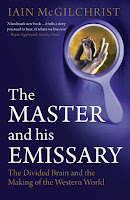
“Is design thinking a right-brain specialization?” or “Am I a left-brain person?” Questions of these sorts are not uncommon in my design thinking workshop. However, I have been unsure of my response to this topic so far. My ambivalence has been influenced by the literature that points to the myths associated with creative-left vs analytical-right brain classification (also check this article). But then popular authors like Daniel Pink have argued that abilities like design are right-brain abilities (Check his video 53:00). My friend and collaborator Prof. Ganesh Prabhu has been presenting this Daniel Pink view in our joint program at IIM Bangalore for the past few years. That kept on nudging me to look for more evidence one way or the other. Recently, I came across Iain McGilchrist's book “The master and his emissary: the divided brain and the making of the Western world” which has shed some light on this confusion. In this article, I would like to present my learnings from this book related to this left-vs-right brain topic.

Let me begin with a process view of design thinking and associated competencies that I present in my workshops. Note that this is not the only process view of design thinking and is borrowed from the Stanford Design School framework. The competency view is not exhaustive either. But it is useful for our purpose.


Now, let’s turn to McGlichrist's book “The master and his emissary”. McGilchrist is suggesting in this book that left (LH) and right hemispheres (RH) are different in not what they do but how they see or pay attention to the world. The LH sees the world through a map of objects it constructs separate from itself and its primary objective is to secure a better future by manipulating the world. In contrast, the RH sees the world as fresh, living, ever-flowing whole not separate from itself. LH sees parts first while RH sees the whole first. Originally, the RH was the master and the LH was a helper to carry out repetitive tasks. However, over the centuries, the map has become extremely sophisticated and the helper or the emissary has become the dominant master and it has made RH a subservient helper. Through the nerve fibres connecting LH and RH (corpus collosum), LH mostly sends the message to RH, “I don’t need you”. As the map gets solidified, one becomes more intolerant of alternate worldviews. The map begins to get treated as the territory and that creates all kinds of conflicts.

When LH becomes dominant, McGilchrist argues, certain functions where RH plays an important role weaken. He mentions many but here is a list relevant for us: empathy, metaphoric thinking, capacity for insight, and holding ambiguous possibilities in suspension. Here are a few quotes from the book on each of them:

Empathy: Self-awareness, empathy, identification with others, and more generally inter-subjective processes are largely dependent upon…right hemisphere resources. (pg 57, 2019 new expanded edition)

Metaphoric thinking: Metaphoric thinking is fundamental to our understanding of the world because it is the only way in which understanding can reach outside the system of signs to life itself. It is what links language to life…Only the right hemisphere has the capacity to understand metaphor. (pg 115)

Insight: Insight, whether mathematical or verbal, is the sort of problem-solving that happens when we, precisely, not concentrating on it, is associated with activation in the right hemisphere. (pg 65)

Holding uncertainty: The left hemisphere needs certainty and needs to be right. The right hemisphere makes it possible to hold several ambiguous possibilities in suspension together without premature closure on one outcome. (pg 82)

While empathy and metaphoric thinking map directly onto the process view above, insight is typically associated with define and ideation stages, and holding uncertainty is related to hypothesis thinking of the test stage. Thus, if McGilchrist’s hypothesis is indeed correct, then we might have a tendency where LH inhibits RH from either activating or passing on information related to empathy, metaphors, insight, alternate hypotheses. 

Of course, this doesn’t mean everything in design thinking is right-brain centric. For example, one can define a challenge without using a metaphor – improve sales by ten percent or reduce the turnaround time by fifty percent. Inventive techniques seem to, at least partly, belong to the LH domain. Similarly, prototyping would need LH resources to manipulate objects in building the prototype.

In short, McGilchrist’s book “The master and his emissary” suggests that design thinking is heavily dependent on right hemispheric resources. It is no surprise that learners who approach design thinking as purely a conceptual framework to be understood by reading a book or listening to a lecture struggle to grasp the essence.

Monday, February 28, 2022

Can tradition cause brain damage?


“Tradition is a form of brain damage” – is what physicist David Bohm and spiritual teacher Jiddu Krishnamurti agree upon in one of their dialogues in the book “The limits of thought”1. A few months ago I got an opportunity to facilitate a reading-and-reflection session on this dialogue and this sentence created discomfort among a few of the participants. They had valid points. Neither Bohm nor Krishnamurti was a neuroscientist. On what basis are they making such a claim? And neuroscience has advanced significantly in the last fifty years since they had this dialogue. Does it support it now? Let’s explore it in this article.

Let’s begin with the dialogue and then look at it through a neuroscience lens. Here is an excerpt from the dialogue:

DB: It occurred to me that tradition is a form of brain damage.

JK: I agree.

DB: Any tradition, good or bad, makes people accept a certain structure of reality, very subtly, without their realizing they are doing it, by imitation, or by example, or by words, just by statements. So very steadily the child builds up an approach in which the brain attributes things which are in the tradition to a reality which is independent of tradition. And it gives it tremendous importance. Tradition has real effects of all sorts, which may even be valuable in some ways. But at the same time it conditions the brain to a reality, which is fixed.

A person may look at that reality and say, “That’s reality, I‘ve got to keep my feet on the ground.” But this ground has been created by tradition, by thought; it is no ground, it has nothing under it at all. It is sustained and nourished by this damaged brain, which is unable to get out of that circle.

Now, let’s turn to a current neuroscience perspective.

Typically, we associate brain damage with some kind of lesion, some physical damage to the structure of the brain. However, that is a limited view of brain damage. According to Karl Friston, a leading neuroscientist, there are two kinds of brain damages2. One is anatomical and the other is functional. He uses radio as a metaphor to illustrate the difference. Anatomical damage is like cutting off the wires in radio, while functional damage is equivalent to transistors becoming dysfunctional. A transistor is dysfunctional when the message passing through the wires gets broken. In neurobiology, such a failure is called neuromodulatory failure when the messages passed through neural synapses are not gated and/or weighted properly. This results in loss of gain control meaning loss of control in excitation and inhibition of various signals.

As Friston articulates, when the gain control is broken, it results in strengthening false beliefs because the inferences based on the sensory information get compromised. For example, should I carry an umbrella today? This question would be answered based on the weather forecast and the likelihood of rain. When beliefs become rigid, the information passing mechanism becomes dysfunctional and incoming information related to rain is either suppressed or considered unreliable similar to a transistor malfunctioning. So I may end up carrying an umbrella no matter what.

Perhaps what Bohm-Krishnamurti are suggesting is that tradition has the capacity to make certain beliefs so strong that they are no longer amenable for update based on contextual information such as weather forecast. Beliefs related to what dress to wear or not wear, what to eat or not eat, what rituals to carry out, whom to marry or not marry may become so rigid that they suppress the passage of contextual information.  They are treated as true and fixed no matter what. As far as certain beliefs are concerned, the brain becomes dysfunctional, fixed, and context-insensitive.

Thus tradition may cause functional brain damage. What Bohm-Krishnamurti say in the dialogue is that the damage may or may not be permanent. What could heal such damage? Krishnamurti suggests that perception or insight into the whole belief structure, its rigidities and how it is operating, in the form of thought, being stuck in a grove, may heal the brain. I am not aware of any scientific research supporting such a claim. However, work such as that of Catherine Kerr, supports a milder form of this claim. That is, a practice of shifting attention away from thinking into body sensations and breathing may result in making the neuromodulation mechanism more flexible. That is, it may improve the quality of information flow through the neural pathways.

Source:

1.      “The limits of thought”, J. Krishnamurti and David Bohm, Krishnamurti Foundation India, 2013, chapter 5 “Tradition and truth”, page 84. This dialogue happened on August 6, 1975, in Gstaad, Switzerland.  Bohm suggests that “Tradition is a form of brain damage” at 6:13 in the audio

2.      Dysconnection hypothesis of schizophrenia”, August 10, 2017, In this video Karl Friston explains the nature of mental disorders and the possibility of a therapeutic cure of schizophrenia.

Friday, February 25, 2022

Neuroscience of mindfulness: My 4 takeaways from Catherine Kerr perspective

Catherine Kerr (1964-2016) was an American neuroscientist who made important contributions to the neuroscience of mindfulness. Her research was focused on the relationship between the material processes in the brain and the body awareness practices like mindfulness, tai chi and qigong. I found her work interesting because of three reasons. One, she had a cautious attitude towards the tall claims attributed to mindfulness. “Don’t believe the hype,” she said while also mentioning, “Behind the hype, there is some truth”. Two, I found her work on brain rhythms especially alpha waves and their relationship to mindfulness intriguing and relatable. And, three, she was trying to balance quantitative research from brain imaging studies with qualitative research from personal diaries and narratives. In this article, I would like to present my 4 takeaways from Cathy’s perspective. They are related to attentional freedom, brain rhythms, body-brain information loop, and existential reorientation.

Regaining attentional freedom: For many of us, attention is primarily consumed by repetitive thought patterns. Cathy calls this state of mind ungrounded. “Some people don’t even know that they can shift their attention in their body,” she says1. Mindfulness begins with learning to shift attention out of thinking into body sensations. This is what Cathy calls learning to regain attentional freedom2. “When mind lands in the body, you really feel it”3. This is the first step for many of us who tend to be dis-embodied. Cathy feels that people with chronic pain don’t have attentional freedom4.

When attention shifts from ruminating thoughts like “I am not good enough” to present moment sensations there is a different circuit in the brain that gets activated5. Anxious rumination activates the medial prefrontal cortex, also called the default mode network. And present moment awareness activates the lateral prefrontal cortex. Activation of these two circuits is found to be anti-correlated.

Alpha waves as volume control knobs: “How does a practice that begins by paying close attention to the toe reduce negative thoughts?” This is how Cathy introduces the research question she explored6. Her subjects, the treatment group, underwent the 8-week Mindfulness-Based Stress Reduction (MBSR) program. Her findings suggested that the thalamus and associated circuits act as a gatekeeper for various signals and alpha rhythms, brain waves of frequency around 10Hz, act as volume control knobs. For example, currently, as I am sitting in front of a laptop, there is sensory information coming in from my butt on the chair, visual input from the laptop screen, auditory input from surrounding sounds, thoughts related to this blog, etc. Alpha rhythms regulate these signals and block the signals it considers non-relevant in the current context.

When we become dis-embodied and attention is taken up mostly by thoughts, alpha rhythms become inflexible and tend to suppress bodily signals. What Cathy found out is that after 8-weeks of BMSR practice which involved paying attention to bodily sensations, alpha rhythms became more flexible in a statistically significant way. This flexibility extends to other signals as well. That is, learning to be mindful of the body teaches you to be mindful of the other sensations, thoughts and feelings7. Her research also found out that people with chronic pain have inflexible alpha rhythms and they lose access to body-space.

Cathy also mentions that meditators sometimes report feeling cortical rhythms and palpable sensations in other body areas. For me, feeling some kind of tingling sensation in the head, and in other body areas but especially in the head is common. Could that be alpha rhythms? Who knows?

Body-brain information loop: When we hold a cup or an egg in hand, the brain sends motor commands to the hand that moves the muscles. When the egg is held sufficiently tightly, the hand sends information back to the brain telling, “No more motor commands, I have taken in enough of information.” Thus, there is a circular information flow from brain to body and vice versa. This information flow from hand to the brain can be measured by looking at the beta rhythms which are stopping rhythms. Traditionally, scientists have studied these rhythms to understand what is flowing from brain to body. But Cathy’s research looked at the information flow from muscle spindle neurons back to the brain8

Her hypothesis was that when we are more embodied i.e. our awareness extends into our body, the quality of information sent back from the body to the brain is better. Apart from beta rhythms, Cathy also looked at clinical markers in fatigue called inflammatory cytokines9. For this research, Cathy decided to focus on distressed cancer survivors because many of them tend to be actively fatigued for years. They don’t have the energy to do exercise. However, they may be able to do slow body awareness exercises like tai chi and qigong. Cathy was a cancer survivor herself for two decades and a practitioner of these Chinese practices.

Cathy felt that mindfulness needs to be taken “off the cushion”10. Mindfulness is not only about doing a seated meditation. It can happen while you are moving. “Mindfulness on the go” has been an important aspect of my workshops and hence this aspect is interesting to me.

Existential reorientation: During her brain imaging research with the 8-week mindfulness program practitioners, Cathy also looked at the daily journal of some of the participants. And, she was surprised to find that most of them went through a lot of distress during weeks 4, 5 and 611. Participants experienced a feeling of insecurity. Some felt like quitting and moving to the Bahamas. Some of them felt like quitting the program. And in weeks 6, 7, and 8 participants began to settle into a positive trajectory. This led to a new hypothesis that perhaps somatic awareness in the longer-term leads to an existential reorientation i.e., re-construction of self-image12. Self-image has multiple dimensions e.g., bodily self, volitional self, narrative self, social self, etc. Self-image change includes changes to the body’s representation in the brain. She mentioned that this is just a hypothesis and yet to be tested.

From my personal experience and through the interaction with others, it is not at all uncommon to see existential reorientation. Am I an independent entity trying to be in control of the situation? Or am I deeply connected with the world with an illusion of control? Questions of these sorts are common in mindfulness exploration. Are there any associated mechanistic changes to the cognitive processes when the existential orientation changes? It will be interesting to see.

As you can see, many of the questions that Cathy asked haven’t been answered conclusively. However, I liked the questions themselves and I am sure they will have a life of their own.

Sources:

1.       Episode 56: Embodied cognition and its effects on health with Cathy Kerr”, a podcast interview by Brook Thomas, May 31, 2016 (time stamp: 13:40)

2.       Starting with the body: the neuroscience of somatosensory attention”, a talk by Catherine Kerr at Amherst College, Nov 11-13, 2011 (Cathy talks about attentional freedom at 28:53)

3.       Episode 56” (14:35)

4.       Starting with the body” (28:58)

5.       Starting with the body” (6:20)

6.       Mindfulness starts with the body: A view from the brain”, TEDx talk by Catherine Kerr, May 22, 2012 (3:00)

7.       Starting with the body” (16:40)

8.       Episode 56” (Cathy talks about beta rhythms and the information flow at 43:55)

9.       Episode 56” (Cathy talks about the clinical markers of fatigue in blood at 27:00)

10.   Episode 56” (17:50)

11.   Using qualitative methods in mindfulness studies to contextualize brain data”, talk by Catherine Kerr at UC Davis, May 21, 2015. (18:30)

12.   Using qualitative methods in mindfulness” (20:20)

Wednesday, February 9, 2022

Innovation dashboard: examples of process goals

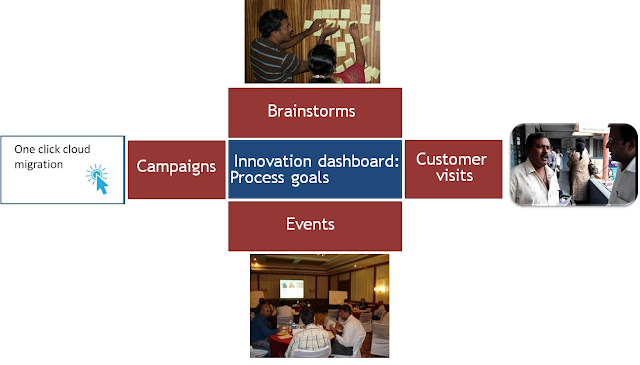
In an earlier blog, I have proposed that an innovation dashboard is the defining characteristic of a basic form (level-2) of innovation maturity. Most innovation dashboards have a bias for outcome goals – ideas, patents, experiments, participation, savings, revenue, profit, etc. However, those who exercise would know the importance of process goals. For an outcome goal such as weight reduction, it helps to have a process goal such as 10,000 steps a day. What could be the process goals in an innovation dashboard? Here are a few suggestions bucketed under four categories: brainstorms, customer visits, events, and campaigns.

1.     Brainstorms: These are meetings where divergent thinking is encouraged. Types of meetings could be:

a.     Challenge book brainstorm: where challenges relevant to a business, function or customer engagement are brought out / prioritized. The team may decide to take a position on one or two key challenges.

b.     Solution brainstorms: Ideas in response to a challenge are explored together

c.      Journey mapping: Observations from the journey of a product/ service/ issue/ ticket are mapped onto a journey board from which patterns/insights could be derived. 

2.     Customer visits: These could be meetings at customer premises or in the field but these also could be focus group discussions where customers are brought together on vendor’s premises.

a.     Field-visit: The objective here could be to interview customers / potential customers. The intent could also be to validate prototypes.

b.     Focus-group discussion: A toy-maker may bring kids while a medical device maker may bring doctors for a focussed group discussion.

c.      Co-innovation workshops: These are workshops where various stakeholders associated with a challenge area are brought under one roof. For example, for a challenge related to education, one may bring students from different schools, teachers, parents or even dropouts if relevant to understand various perspectives. 

3.     Events: could last half day to 2-3 days. Here are a few possibilities:

a.     Innovation review: This could be a half-day event where all innovation projects get reviewed and resource allocation happens.

b.     Hackathon: This 1 or 2-day event might bring people with ideas related to a challenge area under one roof where they build prototypes and bring their ideas alive.

c.      Training: These programs could be a few days to a few weeks long. As part of these training programs, participants may work on business-relevant challenges, create solutions, build prototypes and even present business cases to a panel.  

d.     Innovation day: This day-long event typically showcases innovations from teams within the organization, gets external speakers, and gets people to talk to each other. 

4.     Campaigns: This is arguably the trickiest category. It involves running a campaign around a challenge perhaps over a month or two. It combines some of the elements mentioned earlier. It begins by identifying a sponsor – a CXO or a business head – who is willing to sponsor promising ideas solving business-relevant problems. Some of the steps involved in a challenge campaign area: finding a sponsor, throwing open a challenge, inviting and selecting ideas, organizing a hackathon for selected ideas, mentoring promising teams to develop the ideas further and making a business case and finally presentations to a panel which selects one or more ideas to carry forward.

Hope these examples help in identifying a few process goals for your innovation dashboard.

Sunday, December 26, 2021

Ramana Maharshi’s self-inquiry through Upadesa Saram verses

I have been reading Ramana Maharshi (RM) for the past twenty-five years. However, Upadesa Saram (The essence of the teaching) is special because it is the only text which I am able to read currently in the same language that Ramana Maharshi wrote in – Sanskrit. It was originally composed in Tamil (1927) and RM himself translated it in three other languages – Telugu, Malayalam, and Sanskrit. Ramana Maharshi championed the self-inquiry approach and suggested that “Who am I?” is the most important question in spirituality (and perhaps life itself). Upadesa Saram has 30 verses. In this article, I have selected four that highlight the self-inquiry approach. For each verse, we will see it in the Devanagari script and English, followed by my English translation (hence, all errors are mine). Then I have given some text sourced from “Talks with Ramana Maharshi” which I feel is relevant to the verse. Finally, I have added my comments to each verse based on my limited understanding. There is a beautiful rendering of Upadesa Saram on YouTube (verse 16 starts at 2:50).

Verse 16:

दृश्यवारितं  चित्तमात्मनः   

चित्त्वदर्शनं तत्त्वदर्शनं ॥16॥

drsya-vaaritam cittam-aatmanah

cittva-darshanam tattva-darshanam

Translation: By turning attention away from external objects towards the mind, the Self is seen, the essence is seen.

RM comments: “Because your outlook has been outward bent, it has lost sight of the Self and your vision is external. The Self is not found in the external objects. Turn your look within and plunge down; you will be the Self”. (talk 238)  “The Self is giving rise to the mind, sustaining it, and resolving it. So the Self is the underlying principle.” (talk 97)

My comments: In self-inquiry, turning the attention inward to watch the mind and associated movements, is arguably the most important and perhaps the most difficult step. For most of us, the story of self (the limited-I) is extremely important and attention-grabbing.

Verse 17:

मानसं तु किं मार्गणे कृते        

नैव मानसं मार्ग आर्जवात् ॥17||

Maanasam tu kim maargaNe krte

Naiva maanasam maarga arjavaat

My translation: When explored, “What is mind?” (One finds) there is no mind; that is the most direct path.

RM comments: “Continuous search for what the mind is results in its disappearance. This is the straight path” (talk 222).

My comments: What does RM mean when he says, “There is no mind”? It is a state in which the mind, the body, and the world are seen to be not separate from the Self. “They (the body, the mind, and the world) do not remain apart from the Self.” (talk 97) So, "there is no mind" means, there is no separate mind like a wave is not separate from the ocean.

Verse 18:

वृत्तयस्त्वहं वृत्तिमाश्रिताः       

वृत्तयो मनो विध्द्यहं मनः ॥18||

Vrttayastvaham vrttimaashritaah

Vrttayo mano viddhyaham manah

My translation: The self (limited-I) is a bundle of thoughts. These thoughts spring from I-thought as the source.

RM comments: “The sense of body is a thought; the thought is of the mind, the mind rises after the ‘I-thought’, the ‘I-thought’ is the root thought.” (talk 244)

My comments: Here “thought” means both thoughts that are currently active as well as latent predispositions. RM says, “The mind may be latent and it must necessarily rise up again; after it rises up one finds oneself only as ever before. For in this state the mental predispositions are present there in the latent form to remanifest under favourable conditions.” (talk 465)

Is this I-thought a subject or an object? RM says, “Inasmuch as it witnesses all other objects in the waking and dream states, or at any rate we think that it does so, it must be considered to be the subject. On realising the Pure Self, however, it will be an object only.” (talk 323) I feel watching the nature of I-am-the-body disposition spring up and subside just like how other sensations and emotions arise and pass away is an important aspect of self-inquiry.

Verse 19:

अहमयं कुतो भवति चिन्वतः       

अयि पतत्यहं निजविचारणम् ॥19||

Ahamayam kuto bhavati cinvatah

Ayi patatyaham nijavicaranam

Translation: When reflected, “Where does this I-thought come from?” this I-thought vanishes. This is self-inquiry.

RM-comments: “The ego is itself unreal. What is the ego? Enquire. The body is insentient and cannot say ‘I’. The Self is pure consciousness and non-dual. It cannot say ‘I’. No one says, ‘I’ in sleep. What is the ego then? It is something intermediate between the inert body and the Self. It has no locus standi. If sought for it vanishes like a ghost. You see, a man imagines that there is something by his side in darkness; it may be some dark object. If he looks closely the ghost is not to be seen, but some dark object which he could identify as a tree or a post, etc. If he does not look closely the ghost strikes terror in the person. All that is required is only to look closely and the ghost vanishes. The ghost was never there. So also with the ego. It is an intangible link between the body and Pure Consciousness. It is not real. So long as one does not look closely it continues to give trouble. But when one looks for it, it is found not to exist.” (talk 612)

For the limited-I, a typical question is, “How do I know if there is spiritual progress?” RM answers, “The degree of absence of thoughts is the measure of your progress towards Self-realisation. But Self-realisation itself does not admit of progress; it is ever the same. The Self remains always in realisation. The obstacles are thoughts. Progress is measured by the degree of removal of obstacles to understanding that the Self is always realised. So thoughts must be checked by seeking to whom they arise. So you go to their source, where they do not arise.”

My comments: Instead of judging whether the I-thought has vanished, I feel it is important to seek the source of thoughts as RM suggests in the first line of this verse. This requires learning to watch the movement of thought while thinking. If this feels too difficult, it may help to learn to watch the movement of breath and/or body sensations which are subtler than the body movement but not as subtle as the movement of thought.

Interestingly, the Sanskrit word “nija” in “nija-vicaranam” (last words of the verse) means both self and constant or continual. Hence, “nija-vicaranam” can also be interpreted as constant-inquiry in addition to self-inquiry.  As RM says, “The sadhak (seeker) must remain as the Self. If he cannot do so, he must ascertain the true meaning of the ‘I’ and constantly revert to it whenever other thoughts arise. That is the practice.” (talk 647)

Sources:

  1. “Sri Ramana Maharshi’s way: A translation and commentary on Upadesa Saram”,  D. M. Sastri, Sri Ramanasramam, 1999.
  2. Upadesa Undiyar of Bhagavan Sri Ramana”, word for word translation by Sadhu Om and Michael James of the original Tamil version, 1980.
  3. Talks with Sri Ramana Maharshi”, Sri Ramanasramam, 2006.
  4. A Sanskrit dictionary
  5. Image source: wikipedia.org